**This project, an undergraduate architectural studio work in 2020, served as a precursor to subsequent research on kinetic facades.
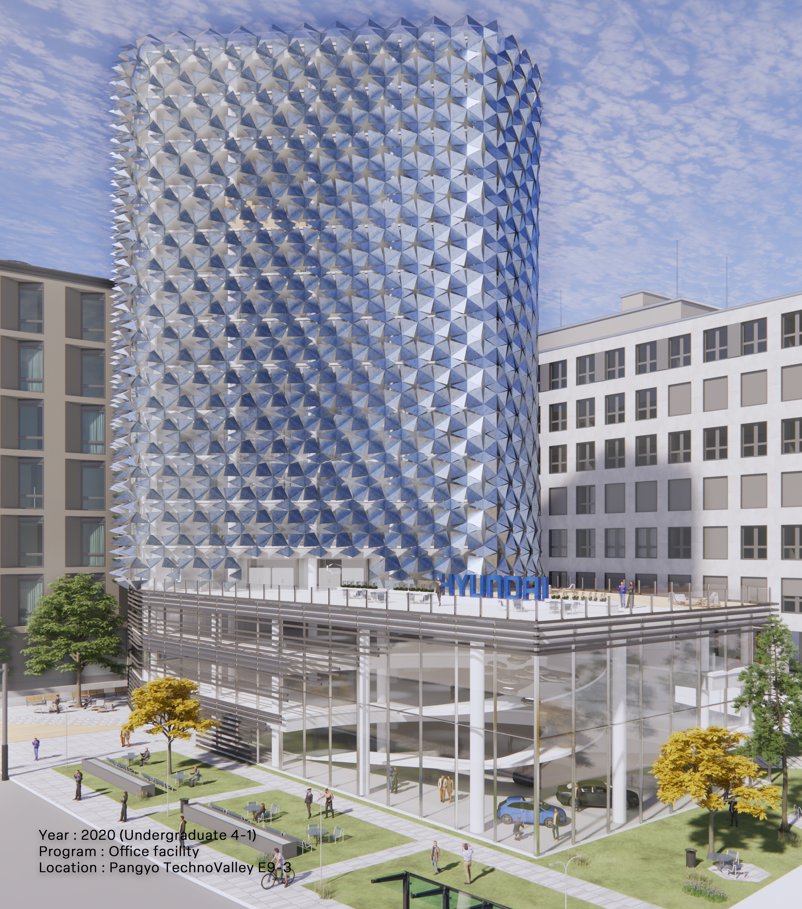
Design Concept
Hyundai Motor Company, a leading automobile manufacturer in South Korea, is advancing towards future mobility by creating human-centric moving spaces for enhanced convenience and enjoyment. Embracing their motto of ‘best mobility,’ kinetic facade technology is integrated into the office building’s exterior, enabling dynamic control of interior workspace environments and atmospheres.
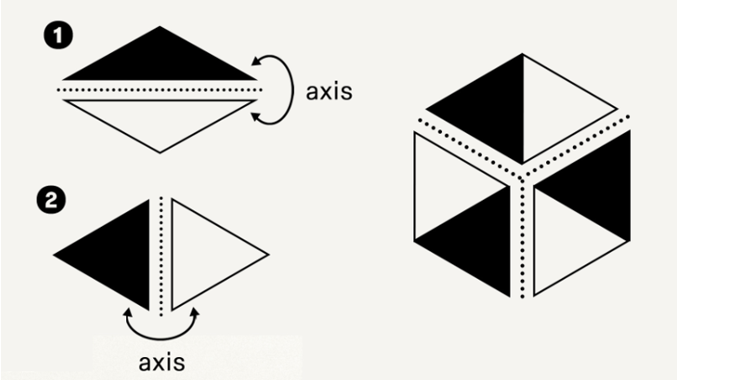
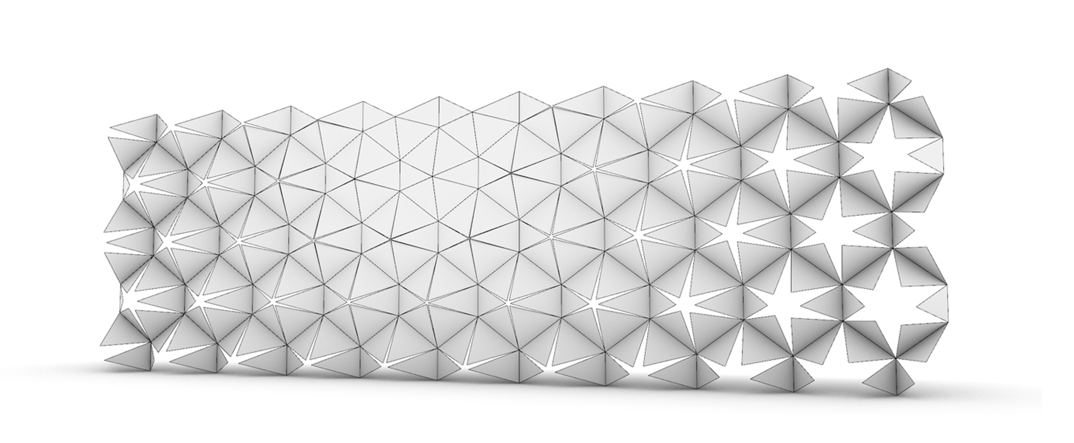
Inspired by Hyundai Motor’s grille design, the kinetic facade employs regular hexagonal modules, each comprising six triangles. These modules, characterized by foldable surfaces and rigid hinged joints, seamlessly envelop the upper mass elevation. Leveraging Rhino Grasshopper’s Paneling tool, clusters of these modules are applied to the target surface, dynamically adjusting their opening ratio in response to external factors such as sunlight, ensuring an adaptive architectural solution.
Application of Kinetic Facade
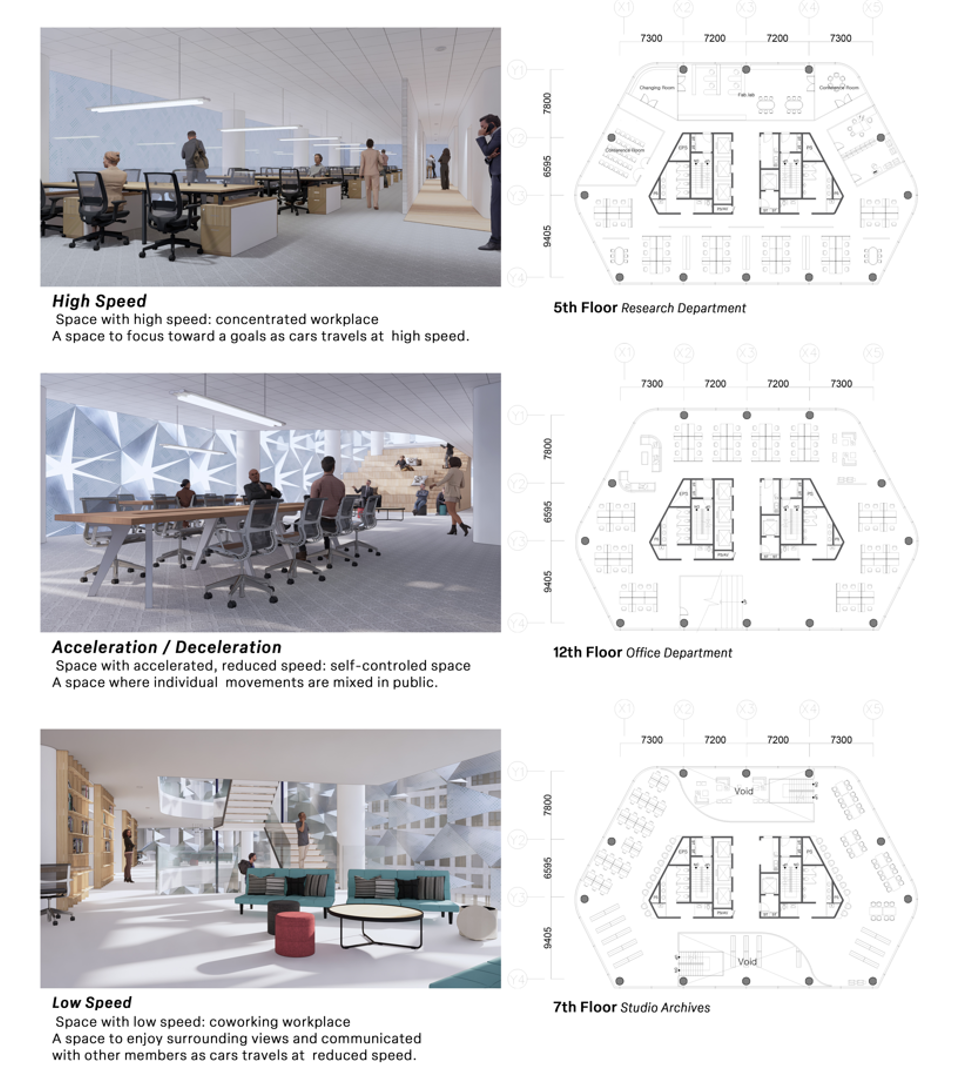
Given that automobiles are mechanical devices directly tied to human safety, the Design Center requires a highly organized and systematic working environment. Employees must be agile in responding to emerging technologies, identifying the necessary tools for each task, and integrating them precisely when and where needed. To support this dynamic workflow, the building itself should be versatile, providing a tailored workspace for every team member. In this design, spaces vary in speed and motion as facade modules continuously adjust, transforming the building’s elevation and interior lighting conditions.
Hexagonal Frame and Panel Assembly
The driving mechanism consists of six microelectric motors, each controlling one triangular metal panel. These panels, connected to an Arduino board and ultrasonic sensor (HC-SR04), open and close with an angle change of up to 80 degrees. The gear system has been developed to enable more efficient movement implementation.
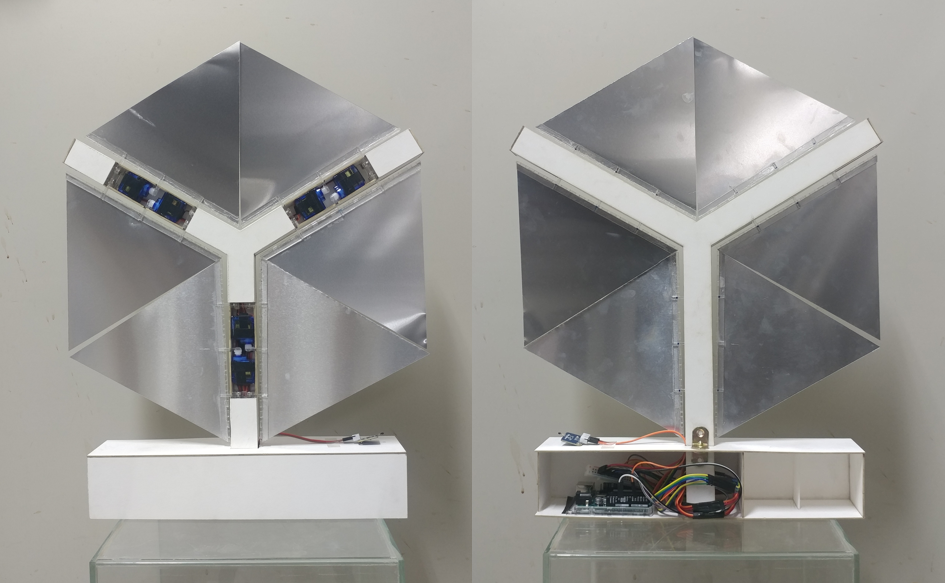
Detailed Operating Mechanism
One potential drawback of electric motor-based kinetic facades is the discomfort that internal users may feel due to visible machinery through the windows. To solve the issue, the machinery is hidden within the body frame of the kinetic facade, which functions as a curtain wall mullion. A single motor located at the center controls six panels.

Architecture Studio, Undergraduate School
Mar. 2020 - Jun. 2021
© Mijin Kim All Rights Reserved