Design Concept
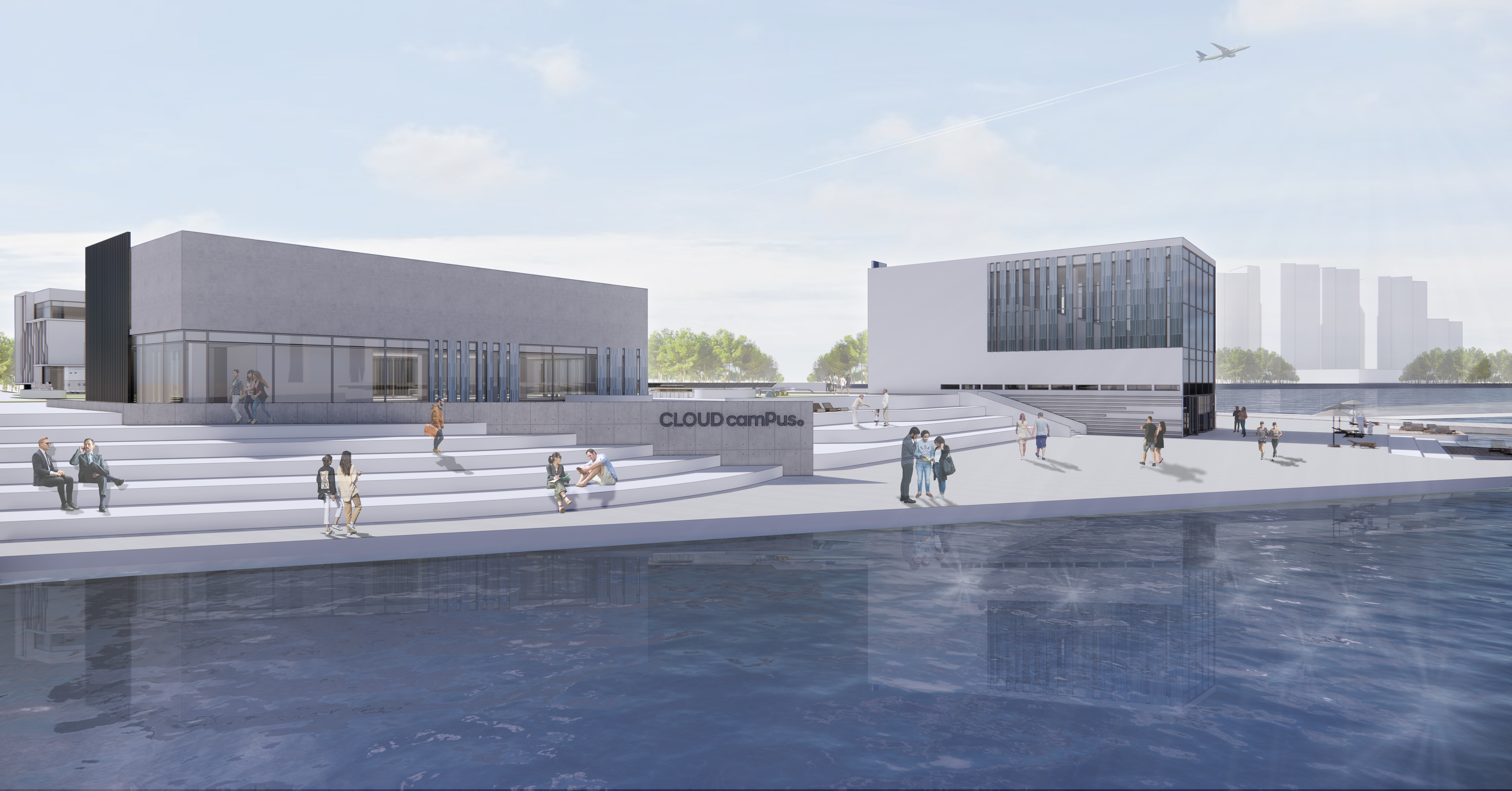
Since the pandemic began in 2019, the space where people cannot communicate has been filled with intangible data. The data is often considered floating in the CLOUD but is actually stored on a global network of high-energy-consuming Data Centers.
This type of building, which lacks traditional architectural characteristics, can be distinguished from general infrastructure because the data center is a ‘modern cultural archive’ where our collective culture is digitized and recorded.
The CLOUD Campus, situated in Songdo, Incheon, is not just a data center. It’s a versatile facility that can be rented for commercial use, serving as a hub for new industries. Simultaneously, it’s an educational facility sharing the advancements of these industries with the general public.
Problem with Current Data Center Facility
City, Architecture, and Society
Issue 1: Despite the increasing demand for architectural developments, data centers are not recognized as significant urban architecture in South Korea. In some areas, they are even regarded as undesirable facilities, leading to discomfort when they are constructed near residential areas. Nearby residents usually complain, including concerns about electromagnetic radiation and environmental pollution, such as the emission of white smoke.
Issue 2: Constructing large-scale data centers in suburban areas can lead to local conflicts due to establishing new power transmission lines and substations, potentially disrupting the region’s ecosystem and landscape.
Issue 3: Data centers, despite their size, require fewer direct employees than other facilities of similar size and are not utilized as public urban spaces.
Environment, Energy, and Technology
Issue 4: From an energy consumption and environmental perspective, data centers use enormous amounts of electricity. Notably, 40% of the total energy is used for cooling the servers. Additionally, this can cuase challenges for the local electricity supply.
Issue 5: Existing eco-friendly data centers are often built in remote locations such as the Arctic or deserts, where human access is limited. This makes it difficult to ensure fast response times when connected to the Internet.
Site Analysis
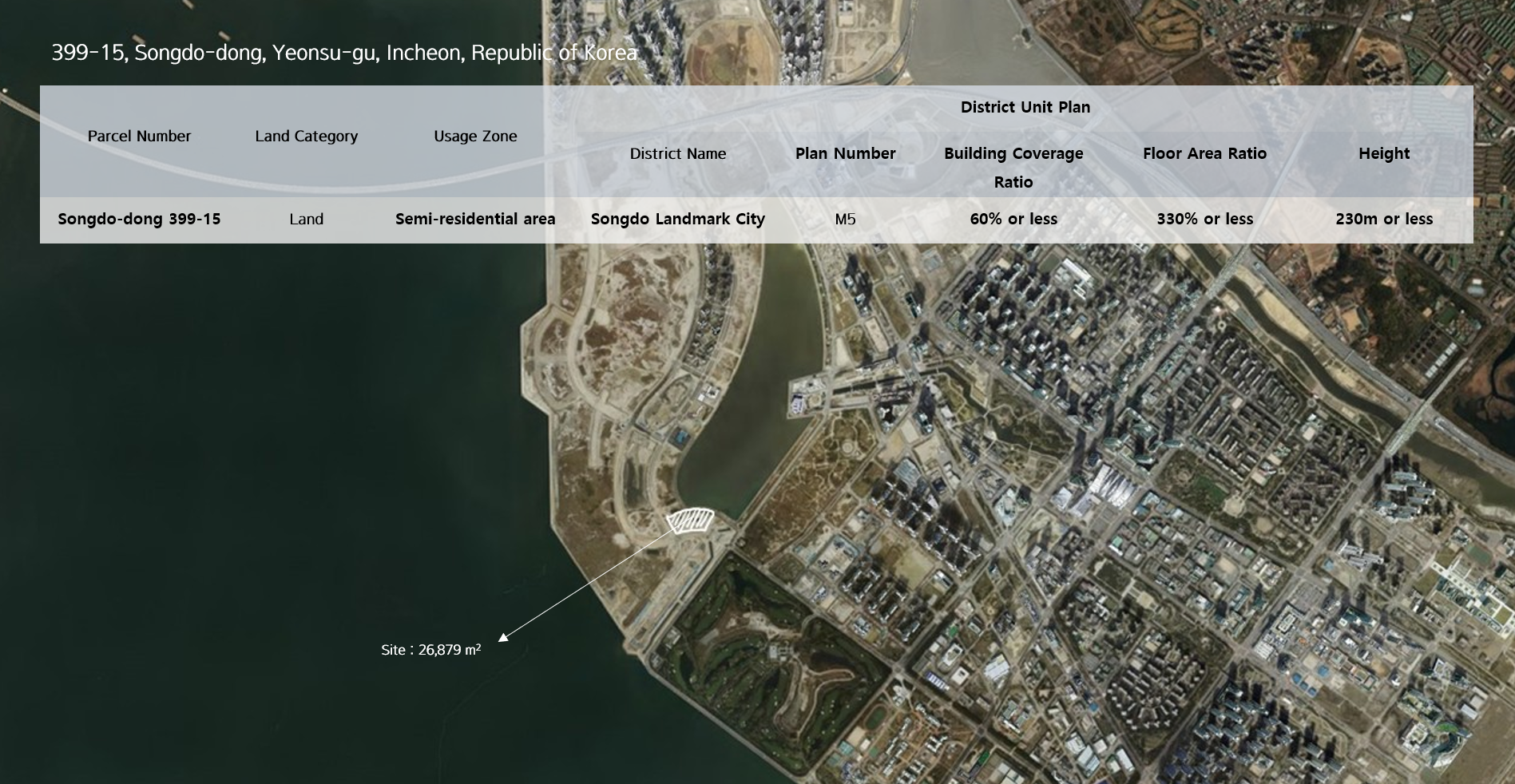
399-15, Songdo-dong, Yeonsu-gu, Incheon, Republic of Korea
- Easy accessibility for companies
- Sufficient infrastructure essential for constructing data centers, such as power plants and communication facilities.
- Educational facilities that can foster diverse industry-academia collaborations
- Suburban areas with lower land prices compared to central Seoul.
- Regions capable of utilizing renewable energy.
Program

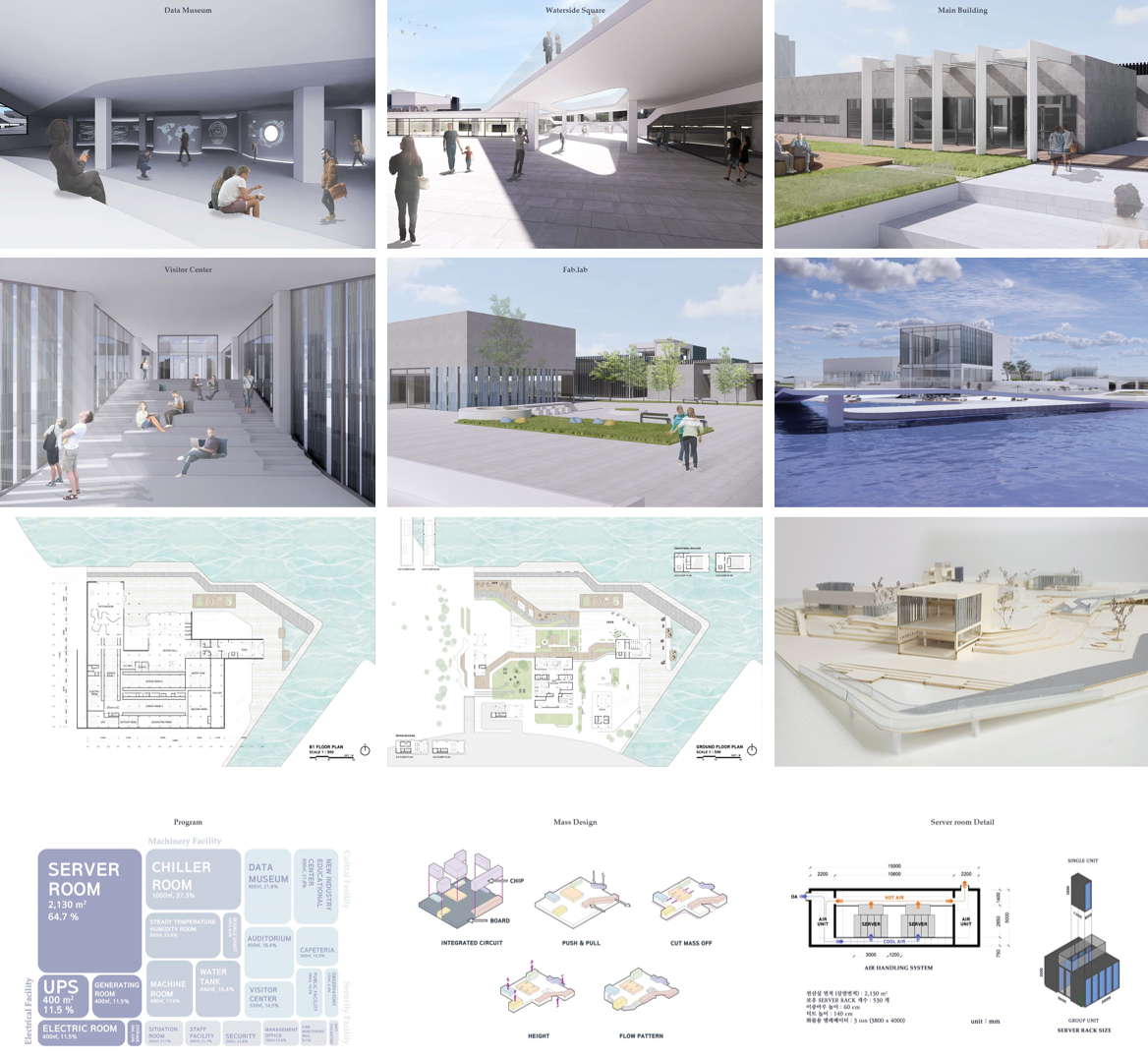
The area is part of the 6th district waterfront, with Zone 6’s lake connected to the West Sea via a short canal. Varying ground levels gently extend the waterfront park across the site, while low-rise buildings provide open and relaxing public spaces. Visitors enjoy panoramic views from the bridge spanning the waterfront yard.
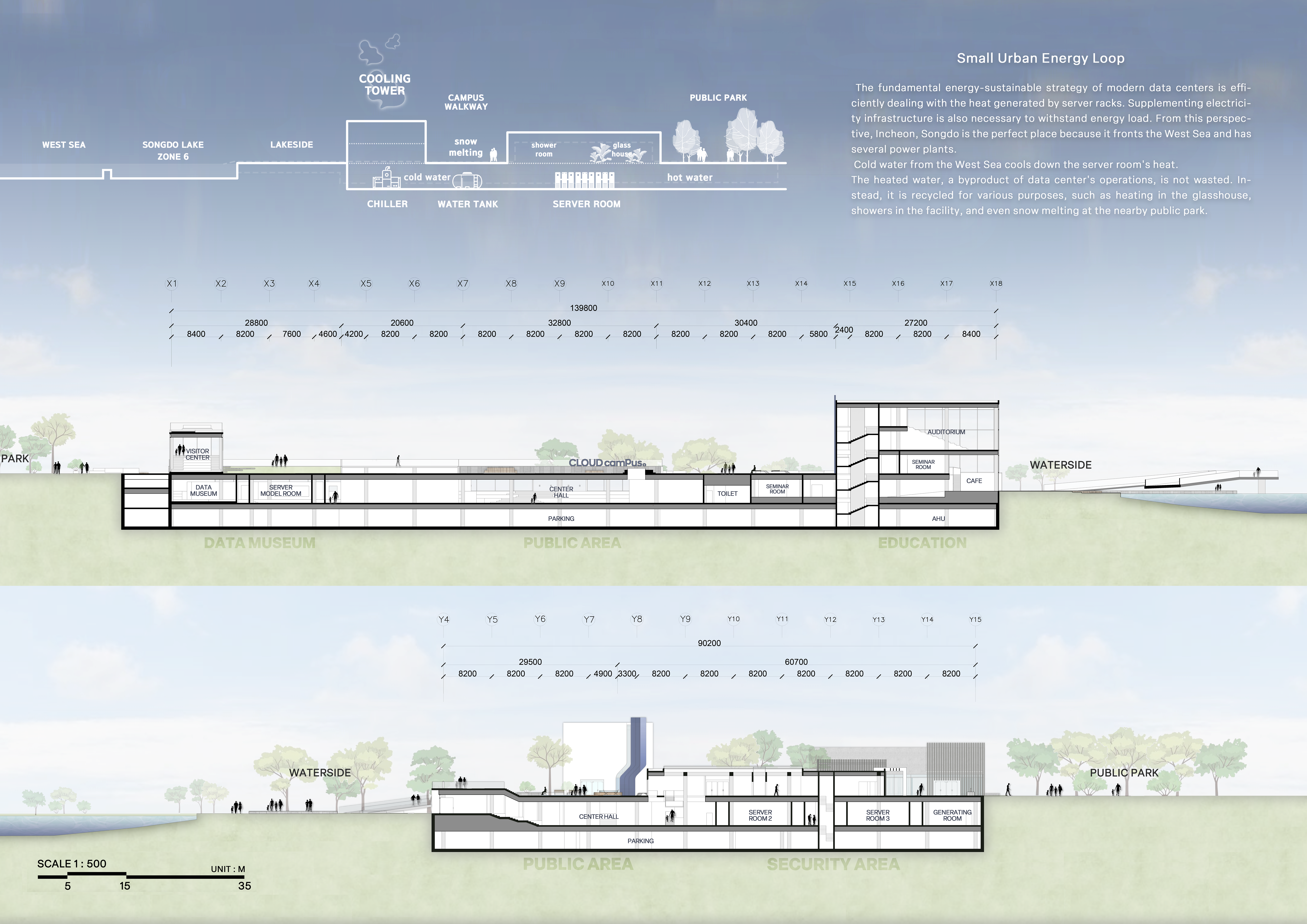
Small Urban Energy Loop
The fundamental energy-sustainable strategy of modern data centers is efficiently dealing with the heat generated by server racks. Supplementing electricity infrastructure is also necessary to withstand energy load. From this perspective, Incheon, Songdo is the perfect place because it fronts the West Sea and has several power plants. Cold water from the West Sea cools down the server room’s heat.
The heated water, a byproduct of the data center’s operations, is not wasted. Instead, it is recycled for various purposes, such as heating in the glasshouse, showers in the facility, and even snow melting at the nearby public park.
Extra Works
Graduation Project, Undergraduate School
Third Place, 2022 Architecture Graduation Exhibition
Mar. 2022 - Jun. 2022
© Mijin Kim All Rights Reserved